Is AI Stealing Our Jobs, or Just Redefining Them? The Truth About the Automation Revolution
Is AI Stealing Our Jobs, or Just Redefining Them? The Truth About the Automation Revolution
The rise of Artificial Intelligence (AI) has been a hot topic for years, promising a future where machines handle tedious tasks and free up humans for more creative pursuits. But whispers of a dystopian future where AI replaces humans entirely have also surfaced, fueling anxieties about mass unemployment and societal upheaval. So, where does the truth lie? Is AI a job-stealing menace or a revolutionary force that will redefine the future of work?
The AI Revolution: More Than Just Fancy Algorithms
AI, in its various forms, is already deeply embedded in our daily lives. From the personalized recommendations on your streaming services to the self-driving cars on the horizon, AI is transforming industries and reshaping the way we interact with the world.

Beyond the hype, AI isn't about creating sentient robots who will replace humans. It's about harnessing the power of data and computation to automate tasks, analyze information, and make decisions with unprecedented speed and accuracy.
The Job-Stealing Myth: Separating Reality from Fearmongering
The idea of AI stealing jobs is not entirely unfounded. Certain repetitive, data-driven tasks are already being automated, impacting roles in sectors like manufacturing, customer service, and even financial analysis. This transition can be unsettling for workers, especially those who fear being left behind.
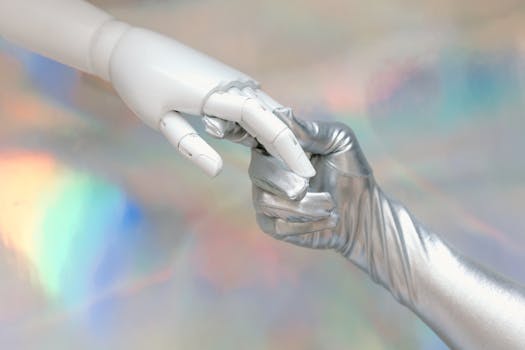
However, it's crucial to understand that AI is not a monolithic force that will wipe out entire job markets. Instead, it's more accurate to view AI as a catalyst for change, one that will reshape industries and create new opportunities alongside those that are disrupted.
The New Landscape: Embracing the Skills of the Future
The future of work in the AI era will be defined by adaptability, creativity, and human-centric skills. While AI excels at automating repetitive tasks, it struggles with tasks that require empathy, emotional intelligence, complex problem-solving, and critical thinking. These are the skills that will be in high demand in the future, as humans are needed to:
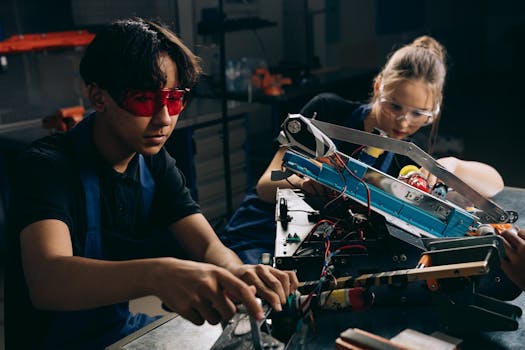
Train and supervise AI systems: AI algorithms need human guidance and expertise to learn, adapt, and function effectively. Interpret AI output: AI can generate vast amounts of data, but humans are needed to interpret it, draw meaningful insights, and make informed decisions. Maintain ethical AI development: As AI becomes more sophisticated, ethical considerations and human oversight will be crucial to ensure responsible development and deployment. Lead with empathy and innovation: Human-centric skills like empathy, creativity, and communication will be essential for navigating the changing workplace and fostering collaborative human-AI partnerships.
The Human-AI Partnership: A Force for Good
Instead of viewing AI as a threat, it's more productive to see it as a powerful tool that can augment human capabilities and unlock new possibilities.

Imagine a future where AI takes over mundane tasks, freeing up human workers to focus on more rewarding and creative pursuits. AI can also help us tackle complex challenges like climate change, disease prevention, and resource management, enabling us to achieve breakthroughs that were previously unimaginable.
The Path Forward: Education, Reskilling, and a Human-Centered Approach
To thrive in the AI-powered future, individuals, businesses, and governments need to embrace a proactive approach. This involves:
Investing in education and reskilling programs: Adapting to the changing skills landscape requires investing in programs that equip individuals with the skills necessary to work alongside AI. Promoting ethical AI development: Establishing clear guidelines and regulations for responsible AI development is crucial to ensure that AI technologies are used for good and do not exacerbate existing inequalities. Fostering collaboration between humans and AI: Focusing on complementary roles and empowering workers to leverage AI as a tool for greater productivity and creativity is essential. Prioritizing social safety nets: Ensuring that everyone has access to opportunities for education, retraining, and social support during this transition is crucial to mitigating potential negative impacts.
Conclusion: Embracing the Future, One AI-Enhanced Step at a Time
The AI revolution is not just a technological shift but a societal transformation. While it presents challenges, it also holds immense potential for a brighter future. By embracing a proactive approach, investing in skills development, and prioritizing ethical AI development, we can ensure that the AI-powered future is one where humans and machines work together to create a more equitable, prosperous, and sustainable world.


Comments
Post a Comment