Is ChatGPT the Death Knell for Google Search? The AI Revolution That's Shaking Up the Internet
Is ChatGPT the Death Knell for Google Search? The AI Revolution That's Shaking Up the Internet
The internet is buzzing with talk of ChatGPT, a powerful new artificial intelligence tool that can generate human-like text, translate languages, write different kinds of creative content, and answer your questions in an informative way. But the excitement around ChatGPT is also tinged with anxiety. Could this be the beginning of the end for Google Search, the king of online information for over two decades?
The Rise of ChatGPT and the AI Revolution
ChatGPT, developed by OpenAI, is built on a large language model (LLM) trained on a massive dataset of text and code. This allows it to understand and generate human-like language in response to a wide range of prompts. Imagine asking a question, and instead of being directed to a page of search results, getting a clear, concise, and accurate answer in plain English. That's the potential of ChatGPT.
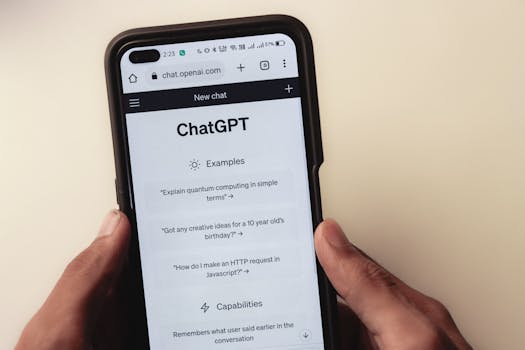
The arrival of ChatGPT represents a seismic shift in the way we interact with information. Gone are the days of sifting through endless search results, struggling to decipher jargon, and navigating unreliable sources. Now, we have an AI assistant capable of understanding complex queries, generating creative content, and even providing insights that we might not have thought of ourselves.
The Implications for Google Search
Google has long been the undisputed leader in search, dominating the market with its sophisticated algorithms and vast index of web content. But the rise of ChatGPT poses a serious threat to Google's dominance. Here's why:
Direct answers versus search results: ChatGPT provides direct, concise answers to questions, eliminating the need to browse multiple websites. This streamlines the information retrieval process, potentially making Google's search results less relevant. AI-generated content: ChatGPT can generate high-quality content, including blog posts, articles, and even marketing materials. This could lead to a flood of AI-generated content on the internet, making it harder for Google to differentiate between human-written and machine-written content. Personalized information: ChatGPT can learn your preferences and provide tailored information based on your past interactions. This personalized experience could make Google's generic search results seem less appealing.
The Future of Search: A Collaborative Landscape?
While ChatGPT presents a significant challenge to Google, it's important to recognize that it's not a direct replacement for search engines. ChatGPT excels at providing quick answers to specific questions, but it lacks Google's ability to search the entire web for relevant information.
Instead of a battle for supremacy, the future of search might be one of collaboration. Imagine a world where Google's vast index of information is combined with ChatGPT's ability to understand and generate human-like language. This could lead to a search experience that's both comprehensive and user-friendly, offering a seamless blend of information retrieval and AI-powered insights.
The Ethical Considerations
The widespread adoption of AI tools like ChatGPT also raises ethical concerns.

Misinformation and bias: LLMs can be susceptible to biases present in their training data, leading to the generation of inaccurate or misleading information. Job displacement: The potential for AI to automate tasks currently performed by humans, including content creation and customer service, raises concerns about job displacement. Privacy and security: As we increasingly rely on AI tools, it's crucial to ensure the protection of our personal information and data.
The Road Ahead: A Paradigm Shift in Information Access
ChatGPT is more than just a new AI tool; it's a catalyst for a paradigm shift in the way we interact with information. It's pushing the boundaries of what's possible with AI and challenging the status quo of search.

While the future of search is uncertain, one thing is clear: the lines between human and machine are becoming increasingly blurred. In this new era of AI-powered information access, we must navigate the opportunities and challenges with care, ensuring that technology serves humanity and not the other way around.


Comments
Post a Comment