The AI Revolution: Friend or Foe? The Day Robots Took Our Jobs (and Maybe Our Lives)
The AI Revolution: Friend or Foe? The Day Robots Took Our Jobs (and Maybe Our Lives)
The headlines are screaming it: Artificial intelligence is taking over. From writing news articles to driving cars, AI is rapidly encroaching on domains once considered exclusively human. But is this a technological utopia, or a dystopian nightmare? Are we on the brink of a golden age of efficiency and progress, or are we doomed to a future ruled by machines?
The Rise of the Machines: A Brave New World of Automation
The past few years have witnessed a surge in AI development, with advancements in machine learning, natural language processing, and computer vision pushing the boundaries of what machines can achieve. This progress has led to the creation of powerful AI systems capable of performing tasks previously thought to be the exclusive domain of humans.
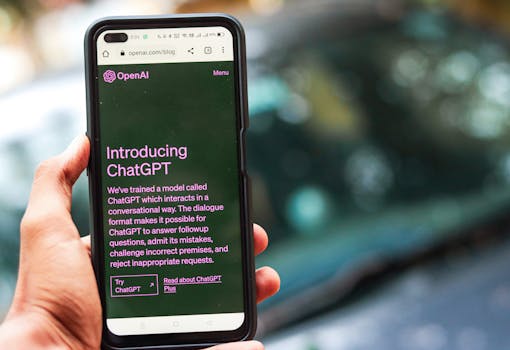
From chatbots that can hold conversations to self-driving cars navigating busy streets, AI is transforming industries at an unprecedented rate. We are now seeing AI-powered systems used in healthcare, finance, manufacturing, and even creative fields like writing and music composition.
This rapid adoption of AI has sparked both excitement and fear. On the one hand, it promises increased efficiency, productivity, and potentially, solutions to some of humanity's greatest challenges. On the other hand, it raises serious concerns about job displacement, economic inequality, and even existential threats to human control.
The Job Market: Will Robots Steal Our Jobs?
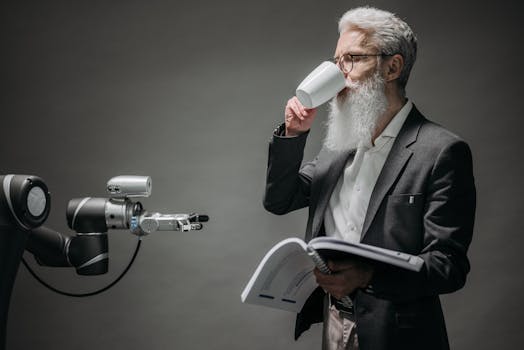
One of the most pressing concerns regarding AI is its potential impact on the job market. As AI systems become more sophisticated, they are capable of automating tasks previously performed by humans, leading to fears of widespread job displacement.
While some argue that AI will create new jobs in areas related to AI development and maintenance, others fear that the net effect will be a loss of jobs, particularly in sectors like manufacturing, transportation, and customer service.
The reality is likely somewhere in between. While AI will undoubtedly automate certain tasks, it will also create new opportunities in areas where human creativity, critical thinking, and emotional intelligence are essential. The key will be to adapt to the changing landscape and re-skill the workforce to meet the demands of the AI era.
Ethical Concerns: Who Controls the Machines?
Beyond economic concerns, the rise of AI raises a host of ethical questions. As AI systems become more sophisticated, they will make decisions that have far-reaching consequences. Who is responsible for these decisions? What safeguards are in place to prevent AI from being used for malicious purposes?
These questions are particularly pressing in the context of autonomous weapons systems, which could potentially make life-or-death decisions without human intervention. The development of such systems has sparked widespread debate about the potential for AI to be used for warfare, raising serious concerns about the ethical implications and potential for unintended consequences.
The Future: Coexistence or Conflict?
The future of AI is still unfolding, but one thing is clear: it is here to stay. The question is not whether AI will play a role in our lives, but how we will manage its impact.
The key to a successful future with AI lies in striking a balance between harnessing its potential and mitigating its risks. We must ensure that AI development is guided by ethical principles, that its use is transparent and accountable, and that the benefits of AI are shared equitably.
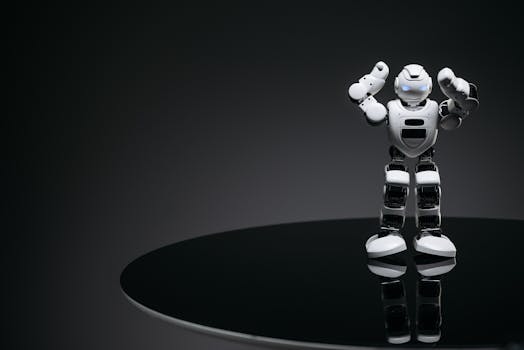
We need to invest in education and training to prepare the workforce for the jobs of the future. We need to foster innovation in areas where human creativity and ingenuity are essential. And we need to engage in open and honest dialogue about the potential benefits and risks of AI, ensuring that its development and deployment is guided by our collective values.
The future of AI is ultimately in our hands. We have the power to shape its development and ensure that it serves humanity, not the other way around. By embracing AI responsibly and harnessing its power for good, we can usher in a new era of progress and prosperity.


Comments
Post a Comment