The AI Revolution: Will It Save Us or Destroy Us? A Look at the Ethical Implications of Artificial Intelligence
The AI Revolution: Will It Save Us or Destroy Us? A Look at the Ethical Implications of Artificial Intelligence
The news is buzzing with talk of AI. From self-driving cars to personalized medicine, artificial intelligence is rapidly changing our world. But amidst the excitement and promise, a chilling question lingers: is AI a force for good or a harbinger of doom?
This isn't a futuristic dystopian novel, it's a real-world debate with profound implications for humanity. We're entering a new era where machines are learning, adapting, and even making decisions that were once exclusively human. This begs the question: can we control the very technology we've created?
The Rise of AI: A Double-Edged Sword
AI is a powerful tool, but like any tool, it can be wielded for good or evil. Its potential benefits are undeniable:
Increased Efficiency and Productivity: AI can automate tasks, freeing up human workers to focus on more creative and strategic endeavors. This can lead to greater efficiency and productivity across various sectors, boosting economies and improving standards of living. Enhanced Healthcare and Medical Advances: AI is revolutionizing healthcare, enabling faster and more accurate diagnoses, personalized treatment plans, and even the development of new drugs and therapies. Improved Safety and Security: AI is being used to enhance security systems, detect fraud, and even predict and prevent crime. This can contribute to a safer and more secure society for everyone.
However, the rapid advancement of AI also raises serious concerns:
Job Displacement and Economic Inequality: As AI automates more jobs, human workers may find themselves redundant, leading to widespread unemployment and exacerbating economic inequality. Algorithmic Bias and Discrimination: AI systems are trained on data sets, which can reflect existing societal biases. This can result in discriminatory outcomes, further perpetuating inequality and injustice. Erosion of Privacy and Security: AI systems collect vast amounts of personal data, raising concerns about privacy violations and the potential for misuse of this information. The Rise of Superintelligent AI: Some experts warn that the development of superintelligent AI could pose an existential threat to humanity, as machines may surpass our intelligence and capabilities, potentially leading to unintended consequences.
Navigating the Ethical Labyrinth
The ethical considerations surrounding AI are complex and multifaceted. It's not a simple case of good versus evil; rather, it's a nuanced discussion about how we can harness the power of AI while mitigating its potential risks.
1. Responsible Development and Deployment: We need to ensure that AI is developed and deployed responsibly, taking into account the potential ethical implications and addressing concerns about bias, privacy, and security. This requires collaboration between governments, researchers, industry leaders, and the public to establish ethical guidelines and frameworks for AI development.
2. Transparency and Explainability: AI systems are often opaque, making it difficult to understand their decision-making processes. This lack of transparency can lead to mistrust and undermine public confidence in AI. We need to prioritize explainable AI, ensuring that systems are transparent and their decision-making processes are understandable to humans.
3. Human Oversight and Control: While AI can automate tasks, it's crucial to maintain human oversight and control. This ensures that AI systems are used for good and not for malicious purposes. It also allows humans to intervene in situations where AI may make mistakes or exhibit biases.

4. Education and Awareness: To navigate the AI revolution, we need to promote public awareness and education about AI. People need to understand the potential benefits and risks of AI, as well as their rights and responsibilities in a world shaped by intelligent machines.
5. International Collaboration: AI is a global issue that requires international collaboration. We need to work together to establish ethical standards, share best practices, and address the global challenges posed by AI.
The Future of AI: A Collective Responsibility
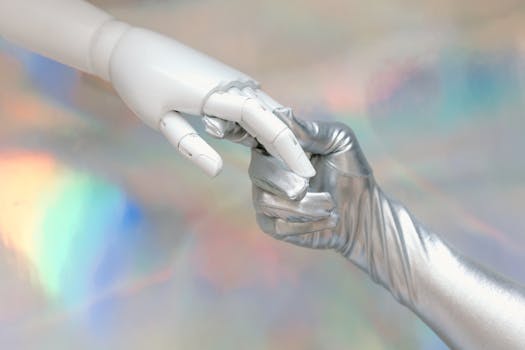
The AI revolution is here, and its impact on our lives will be profound. It's a powerful tool with immense potential for good, but it also presents serious challenges. We need to approach AI with caution, responsibility, and a strong ethical compass. The future of AI is not predetermined; it's a collective responsibility that we must all embrace.
By embracing ethical AI development, promoting transparency and explainability, ensuring human oversight, fostering education and awareness, and fostering international collaboration, we can navigate the complexities of the AI revolution and harness its power to create a better future for all.


Comments
Post a Comment